Wildfire smoke increases dementia risk, study finds

Add Axios as your preferred source to
see more of our stories on Google.
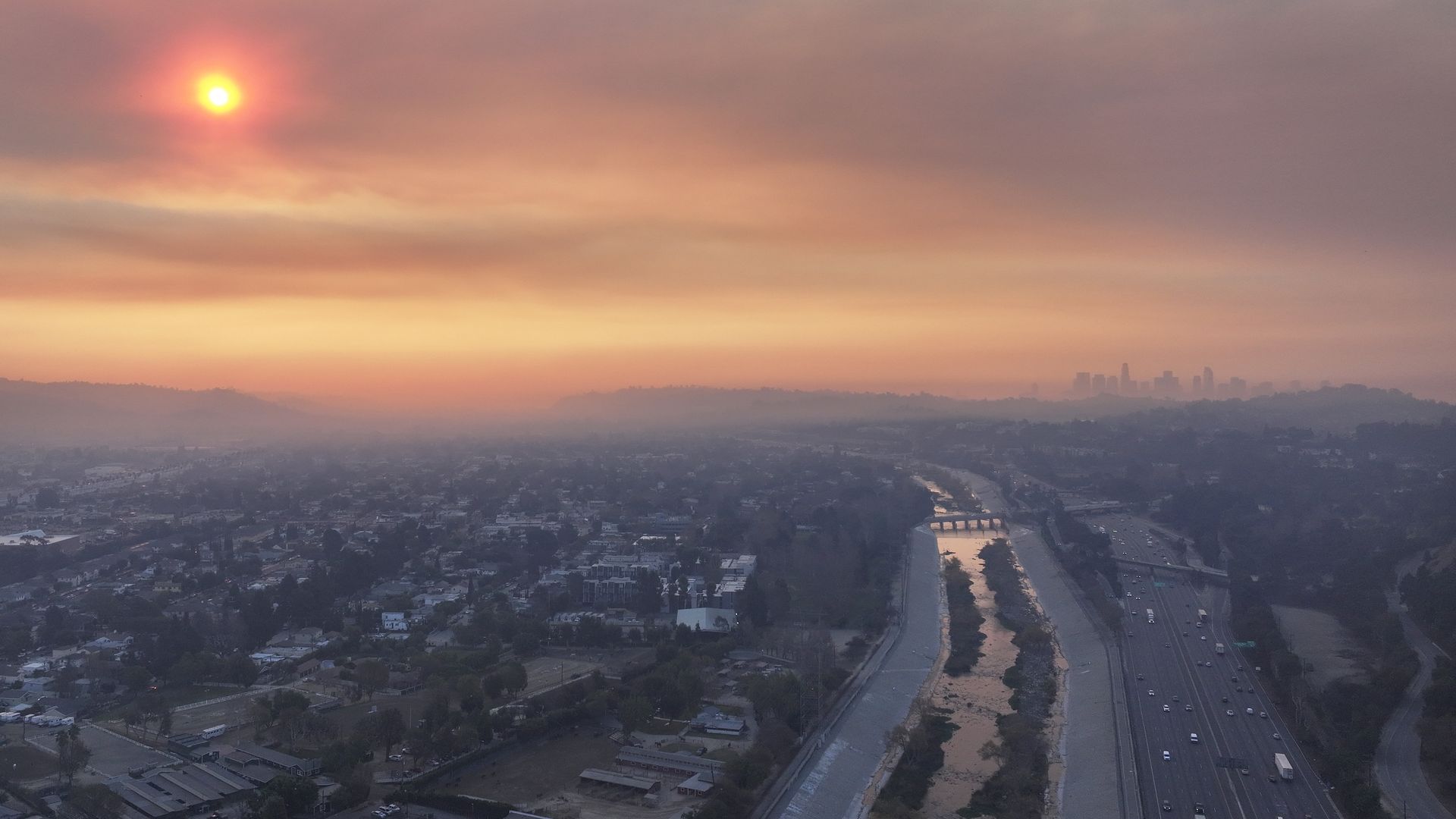
Wildfire smoke hangs over downtown Los Angeles on Thursday. Photo: Mario Tama/Getty Images
People exposed to wildfire smoke have a much greater risk of developing dementia, according to a recent study led by researchers at the University of Washington.
Why it matters: While wildfires cause destruction and force evacuations in Southern California, researchers are finding that wildfire hazards affect more people than those directly in the path of the flames.
What they did: The study, published in the journal JAMA Neurology in November, analyzed health care records of 1.2 million Southern California residents between 2008 and 2019, then estimated their exposure to wildfire smoke as a three-year rolling average.
- People included in the study were over 60 and hadn't been diagnosed with dementia at the start of the study period.
What they found: The researchers found that long-term exposure to wildfire smoke was associated with significantly higher odds that a person would be diagnosed with dementia.
- The risk associated with wildfire smoke was even greater than the risk associated with other types of fine particle air pollution, the authors found.
What they're saying: Joan Casey, one of the study's authors, said in a news release that a few smoky days where the air quality index is over 200 may be enough to increase a person's odds of developing dementia.
- "It's actually a few really severe wildfire smoke days that might translate into increased risk," said Casey, an associate professor of environmental and occupational health sciences at the University of Washington.
The big picture: Casey said the study's findings highlight the need for "a global solution to climate change," which she described as "the main culprit" behind worsening air quality in recent years.
- In the meantime, public health officials recommend that people check local air quality online and stay indoors if the air quality index is over 150.
- Children, adults over 65 and people with asthma or other health conditions should limit their outdoor activity when the air quality index is over 100.
- Keeping doors and windows closed when it's smoky helps reduce smoke exposure, as does using an air cleaner with a HEPA filter, per the Environmental Protection Agency.
- You can also make a do-it-yourself air filter using a box fan, the EPA says.